
| Category | TKR |
What is Knee Replacement Surgery?
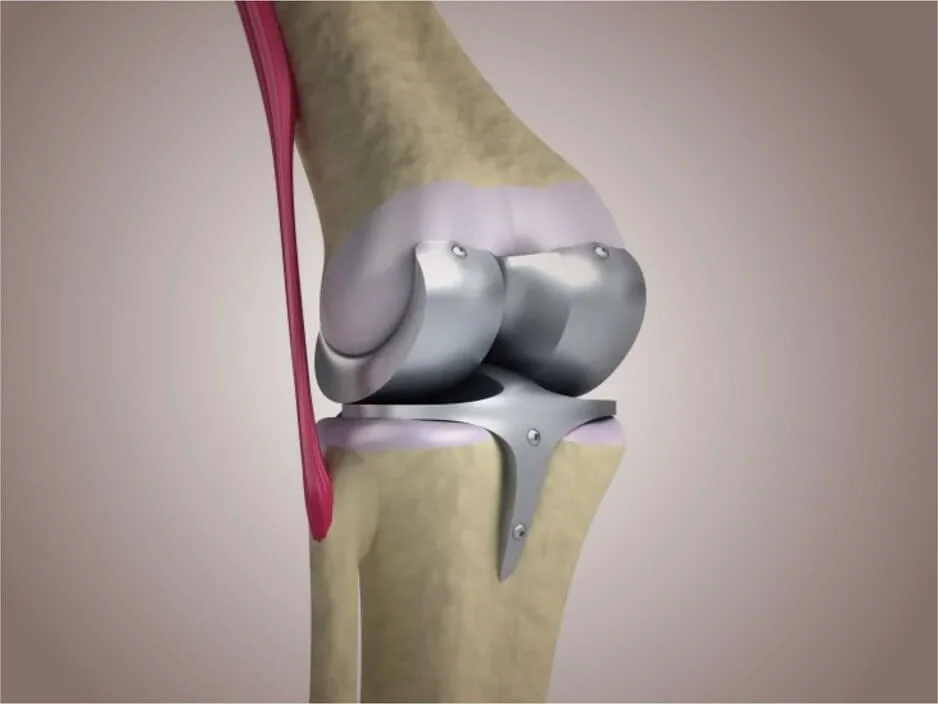
Knee replacement surgery also medically called knee arthroplasty can help relieve pain and restore function in severely diseased knee joints. The procedure involves removing the damaged bone and cartilage from your knee joint and replacing it with an artificial joint (prosthesis) made of metal alloys, high-grade plastics, and polymers. This surgery may be considered for someone who has severe arthritis or a severe knee injury.
Why It’s Done
The most common reason for knee replacement surgery is to relieve severe pain caused by osteoarthritis. People who need knee replacement surgery usually have problems walking, climbing stairs, and getting in and out of chairs. Some also have knee pain at rest.
Various types of arthritis may affect the knee joint. For details about knee structure and anatomy please refer to section knee.
Is Total Knee Replacement for You?
The decision to have total knee replacement surgery should be a cooperative one between you, your family, your primary care doctor, and your orthopedic surgeon. Your doctor may refer you to an orthopedic surgeon for a thorough evaluation to determine if you might benefit from this surgery.

There are several reasons why your doctor may recommend knee replacement surgery. People who benefit from total knee replacement often have:
Candidates for Surgery
There are no absolute age or weight restrictions for total knee replacement surgery.
Total knee replacement may be recommended for patients with bowed knee deformity, like that shown in this clinical photo.
Risks of the Procedure
As with any surgical procedure, complications can occur. Some possible complications may include, but are not limited to, the following:
The replacement knee joint may become loose, be dislodged, or may not work the way it was intended. The joint may have to be replaced again in the future.
Nerves or blood vessels in the area of surgery may be injured, resulting in weakness or numbness. The joint pain may not be relieved by surgery.
There may be other risks depending on your specific medical condition. Be sure to discuss any concerns with your doctor prior to the procedure.
Deciding To Have Knee Replacement Surgery
Realistic Expectations
An important factor in deciding whether to have total knee replacement surgery is understanding what the procedure can and cannot do.
Most people who have total knee replacement surgery experience a dramatic reduction of knee pain and a significant improvement in the ability to perform common activities of daily living. But total knee replacement will not allow you to do more than you could before you developed arthritis.
With normal use and activity, every knee replacement implant begins to wear in its plastic spacer. Excessive activity or weight may speed up this normal wear and may cause the knee replacement to loosen and become painful. Therefore, most surgeons advise against high-impact activities such as running, jogging, jumping, or other high-impact sports for the rest of your life after surgery.
Realistic activities following total knee replacement include unlimited walking, swimming, golf, driving, light hiking, biking, ballroom dancing, and other low-impact sports.
With appropriate activity modification, knee replacements can last for many years.
The Orthopaedic Evaluation
An evaluation with an orthopedic surgeon consists of several components:
(Left) In this x-ray of a normal knee, the space between the bones indicates healthy cartilage (arrows). (Right) This x-ray of a knee that has become bowed from arthritis shows severe loss of joint space (arrows).

Your orthopedic surgeon will review the results of your evaluation with you and discuss whether total knee replacement is the best method to relieve your pain and improve your function. Other treatment options including medications, injections, physical therapy, or other types of surgery — will also be considered and discussed.
In addition, your orthopedic surgeon will explain the potential risks and complications of total knee replacement, including those related to the surgery itself and those that can occur over time after your surgery.
Your Surgery
You will either be admitted to the hospital on the day of your surgery or you will go home the same day. The plan to either be admitted or to go home should be discussed with your surgeon prior to your operation.
Anesthesia
The most common types of anesthesia are spinal anesthesia, epidural, or regional nerve block anesthesia (you are awake but your body is numb from the waist down). The anesthesia team, with your input, determines which type of anesthesia will be best for you.
Procedure
The surgical procedure usually takes from 1 to 2 hours. Your orthopedic surgeon will remove the damaged cartilage and bone, and then position the new metal and plastic implants to restore the alignment and function of your knee.

Different types of knee implants are used to meet each patient’s individual needs.
(Left) An x-ray of a severely arthritic knee. (Right) The x-ray appearance of a total knee replacement. Note that the plastic spacer inserted between the components does not show up in an x-ray.
During the Procedure
Knee replacement requires a stay in a hospital. Procedures may vary depending on your condition and your doctor’s practices.
Knee replacement surgery is most often performed while you are asleep under general anesthesia. Your anesthesiologist will discuss this with you in advance.
The doctor will remove the damaged surfaces of the knee joint and resurface the knee joint with the prosthesis. The knee prosthesis is made up of metal and plastic. The most common type of artificial knee prosthesis is a cemented prosthesis. Uncemented prostheses are not commonly used anymore.
After the Procedure
In The Hospital
It is important to begin moving the new joint after surgery. A physical therapist will meet with you soon after your surgery and plan an exercise program for you. Your pain will be controlled with medication so that you can participate in the exercise. You will be given an exercise plan to follow both in the hospital and after discharge.
You will be discharged home or to a rehabilitation center. In either case, your doctor will arrange for the continuation of physical therapy until you regain muscle strength and a good range of motion.
Physical Therapy
Most patients can begin exercising their knee hours after surgery. A physical therapist will teach you specific exercises to strengthen your leg and restore knee movement to allow walking and other normal daily activities soon after your surgery.
OutComes
How Your New Knee Is Different
Improvement of knee motion is a goal of total knee replacement, but the restoration of full motion is uncommon. The motion of your knee replacement after surgery can be predicted by the range of motion you have in your knee before surgery. Most patients can expect to be able to almost fully straighten the replaced knee and to bend the knee sufficiently to climb stairs and get in and out of a car. Kneeling is sometimes uncomfortable, but it is not harmful.

Most people feel some numbness in the skin around your incision. You also may feel some stiffness, particularly with excessive bending activities.
Most people also feel or hear some clicking of the metal and plastic with knee bending or walking. This is normal. These differences often diminish with time and most patients find them to be tolerable when compared with the pain and limited function they experienced prior to surgery.
Your new knee may activate metal detectors required for security in airports and some buildings. Tell the security agent about your knee replacement if the alarm is activated.
Protecting Your Knee Replacement
After surgery, make sure you also do the following:

Extending the Life of Your Knee Implant
Currently, more than 90% of modern total knee replacements are still functioning well 15 years after the surgery. Following your orthopedic surgeon’s instructions after surgery and taking care to protect your knee replacement and your general health are important ways you can contribute to the final success of your surgery.


